
Scientific Lab Equipment List and Uses - The Complete School Science Laboratory Reference Guide
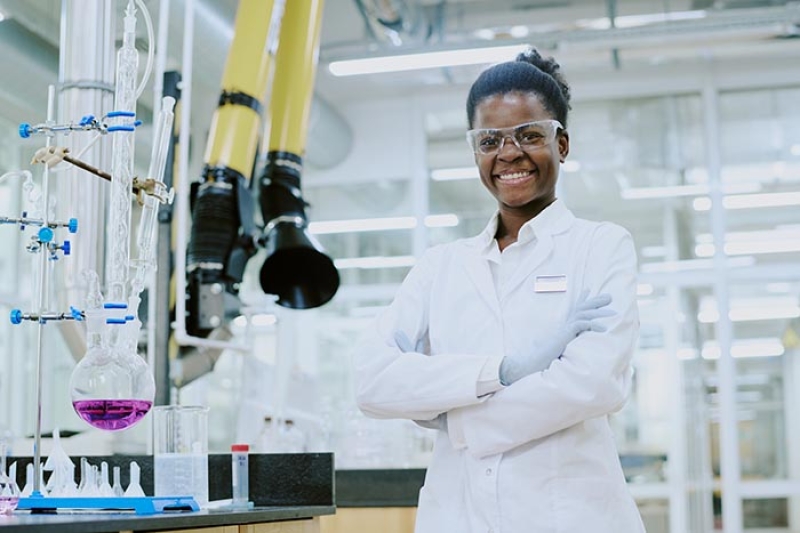
The school science laboratory is a room full of purpose — every instrument on every shelf, in every drawer, and on every bench exists because it enables a specific type of scientific investigation that cannot be conducted any other way. Yet for many educators, lab technicians, and procurement teams, the specific function of less-familiar instruments remains unclear, leading to underused equipment, incomplete experiment programmes, and procurement decisions that miss critical items. This comprehensive scientific lab equipment list and uses guide addresses that gap directly: every major category of school laboratory instrument explained by name, function, key specifications, and application — organised by subject, cross-referenced to curriculum use, and backed by the manufacturing expertise of India's leading school laboratory instruments suppliers, who produce the full range described here and export it to schools worldwide.
Biology Laboratory Equipment: List and Uses
Biology laboratory equipment plays a crucial role in practical learning by helping students understand scientific concepts through observation and experimentation. This biology laboratory equipment List and Uses provides a clear overview of essential tools and their applications in studying cells, tissues, and microorganisms. It also helps build practical skills and improves concept clarity in biology education.
Microscopy Equipment
- Compound microscope (student grade, 40x–400x): The foundation of school biology. Used for observing cells, tissues, microorganisms, and small biological structures. Student-grade instruments with mechanical stages are preferred for secondary school — they allow precise slide positioning for systematic observation.
- Stereoscopic (dissecting) microscope (10x–40x): Used for examining larger specimens in three dimensions — insects, flowers, small organisms, dissection details. Lower magnification but much greater depth of field than compound microscopes.
- Prepared microscope slides (sets): Ready-made slides of plant cells, animal cells, bacteria, fungi, algae, blood smear, and specialised tissues — covering the full secondary biology curriculum without requiring students to prepare live or fixed specimens.
- Blank microscope slides and cover slips: For student preparation of temporary wet mounts — examining living cells (onion, cheek cells), observing movements of single-celled organisms, making blood smears.
- Microscope lamp (LED, detachable): Provides consistent, shadow-free illumination for transmitted light microscopy — essential for consistent student observations across a class.
Dissection and Specimen Equipment
- Dissection tray (wax-base or silicon): The platform for all dissection work — wax trays allow specimen pinning; silicon trays are easier to clean. The tray surface should be clearly differentiated from bench surfaces to maintain safe containment.
- Dissection kit (safety scalpels, mounted needles, forceps, blunt-tipped scissors, seeker): The standard complement of dissection tools for secondary school anatomy investigations. Safety-design scalpels are a non-negotiable specification for school use.
- Dissection pins (stainless steel, straight): For securing specimens in dissection trays. Must be accounted for before and after every dissection session — pin counts prevent instrument loss into waste or student pockets.
- Preserved specimens: Frog, locust, earthworm, fish, flower sets in appropriate preservative (formalin or glycerin alternatives for reduced hazard). Labelled, with known provenance and SDS for the preservative used.
Physiology and Biochemistry Equipment
- Colorimeter / photometer: Measures the absorbance of coloured solutions — used in enzyme kinetics, photosynthesis rate measurement, colorimetric food analysis, and Beer-Lambert Law investigations.
- Water bath (thermostatically controlled, 0–100°C): Provides controlled temperature environments for enzyme activity investigations, osmosis rate experiments, and temperature-dependent reaction studies.
- Chromatography kit (paper chromatography): For separating plant pigments (chlorophylls and carotenoids), amino acid mixtures, and simple organic compounds — introduces separation science and retention factor calculation.
- pH meter or pH indicator strips: For measuring acidity in biochemical investigations — enzyme optimum pH experiments, acid-base titration verification, and environmental water quality assessment.
- Haemocytometer (counting chamber): For counting cells in suspension under the microscope — used in microbiology, blood cell counting studies, and population estimation experiments at advanced level.
Chemistry Laboratory Equipment: List and Uses
Chemistry laboratory equipment enables students to explore chemical processes through accurate measurement, mixing, and analysis of substances. This chemistry laboratory equipment List and Uses highlights key instruments and their functions, helping learners perform experiments safely while building a strong understanding of chemical principles.
Glassware and Vessels
- Beaker (50ml, 100ml, 250ml, 500ml, 1L): The most versatile vessel in the chemistry lab — used for mixing, heating, dissolving, and temporary storage. Graduated markings are approximate (±5%) — beakers are not precision volumetric vessels.
- Conical (Erlenmeyer) flask (100ml, 250ml, 500ml): Preferred for titrations and reactions where the swirling motion used in titration prevents spillage over the narrow neck. Also used for reflux reactions with a condenser.
- Round-bottom flask (100ml, 250ml, 500ml): For reactions requiring even heating and used as the distillation flask in distillation setups — the spherical base allows heating with a Bunsen flame without stress concentration.
- Volumetric flask (100ml, 250ml, 500ml): A single graduation mark at the calibrated volume — the most accurate vessel for preparing solutions of known concentration. Used for standard solution preparation.
- Burette (50ml, graduated 0.1ml): The most precise volume delivery instrument in school chemistry — used in acid-base, redox, complexometric, and precipitation titrations. Reading to 0.05ml precision is expected at examination standard.
- Pipette (10ml, 20ml, 25ml volumetric): Delivers a fixed, accurately known volume — used with a safety filler (never mouth pipetting) in titration and solution transfer. More accurate than measuring cylinders for fixed volumes.
- Measuring cylinder (10ml, 25ml, 50ml, 100ml): For approximate volume measurement where burette or pipette precision is unnecessary. Accuracy is ±0.5% for quality Borosilicate glass cylinders.
- Test tube (borosilicate, 15ml, 25ml) and test tube rack: For small-scale reactions, heating small samples, and observing colour changes. Test tube racks must hold tubes securely at all times — rolling test tubes on bench surfaces cause accidents.
Heating and Support Equipment
- Bunsen burner: Provides a controllable natural gas or LPG flame for heating — the primary heating source in school chemistry. Requires a dedicated gas supply, bench mat, wire gauze, tripod, and clay triangle as a complete heating setup.
- Electric hotplate (thermostatically controlled): A safer alternative to Bunsen burner for schools without gas supply or with younger students — provides controlled flat-surface heating. Cannot provide the open-flame heating needed for some organic chemistry experiments.
- Tripod stand with wire gauze: Supports vessels over a Bunsen flame — the wire gauze spreads the flame heat to prevent thermal shock to flat-bottom vessels.
- Retort stand with clamps and bosses: The universal support system for school chemistry — holds burettes, reflux condensers, thermometers, separation funnels, and a wide range of other apparatus above bench level.
Measurement Instruments
- Analytical balance (0.01g precision, tared): The most critical mass measurement instrument in quantitative chemistry — used for precise mass measurement in stoichiometry, yield calculations, and concentration preparation.
- Thermometer (non-mercury, -10 to 250°C): For temperature measurement in heating, reaction rate, and calorimetry experiments. Digital thermometers are preferred for safety; bi-metallic or alcohol types are acceptable alternatives.
- Stopwatch or timer (0.01 second precision): For time-based rate experiments — reaction kinetics, chromatography Rf value timing, and physical change observations.
Physics Laboratory Equipment: List and Uses
Mechanics Instruments
- Vernier callipers (least count 0.02mm): Measures external diameter, internal diameter, and depth. Used in virtually every mechanics experiment requiring linear dimension measurement — pendulum bob diameter, wire diameter, object dimensions.
- Micrometer screw gauge (least count 0.001mm): For very small dimension measurement — wire diameter for electrical resistance experiments, ball bearing diameter for density calculations, sheet metal thickness.
- Physical balance with calibrated weights: For precise mass measurement in mechanics (centre of mass, density experiments) and as a secondary verification for analytical balance in chemistry.
- Simple pendulum set (adjustable bob, split cork clamp): For SHM investigation, g determination, and period-length relationship experiments. One of the most universally curriculum-specified mechanics experiments.
- Spring (helical) with hanger and slotted weights: For Hooke's Law, spring constant determination, and elastic potential energy experiments.
- Newton's laws demonstration kit (trolley, track, pulley, mass hanger): For demonstrating all three Newton's laws in a controlled, reproducible manner.
Electricity and Magnetism Instruments
- Metre bridge (Wheatstone bridge): Determines unknown resistances using the balanced bridge principle — the most fundamental electrical experiment in secondary school physics, examined by virtually every curriculum board.
- Potentiometer (1-metre and 2-metre models): Compares EMFs and determines internal resistance of cells with zero-current measurement — the most important advanced electrical experiment at A-Level and IB standard.
- Moving coil galvanometer: Detects and measures small electric currents — used as the null-point detector in metre bridge and potentiometer experiments.
- Resistance box (dial type, 0–10,000 ohms): Provides accurate, adjustable known resistance — essential companion for bridge and potentiometer setups.
- Rheostat (wire wound, multiple range): Variable resistance for circuit current control in all electrical experiment setups.
Optics Instruments
- Optical bench (1-metre, precision-machined): The universal platform for all school optics experiments — holds lenses, mirrors, screens, and light sources on a calibrated rail for repeatable, measurable setups.
- Convex and concave lens set (various focal lengths): For focal length measurement, lens formula verification, and optical instrument construction experiments.
- Prism (equilateral glass): For spectrum formation, angle of deviation, refractive index measurement, and critical angle experiments — one of the most visually impactful physics demonstrations.
- Spectrometer (student grade): For measuring refractive index, wavelength of light, and spectral line positions — standard at A-Level, IB, and equivalent upper secondary levels.
Frequently Asked Questions
Specifying a laboratory or preparing a tender?
Send us your syllabus, scope or BOQ. We will build the item list with the grades, standards and calibration requirements stated against each line, so the quotation you receive is comparable.
Bulk supply and tender enquiries
Everything in this guide is manufactured in our own unit and supplied in bulk to schools, colleges, contractors and government tenders in over 80 countries. Browse the range, or send us a BOQ and we will quote against it line by line.