
Educational Scientific Instruments, School Laboratory Scientific Equipment, Biology Lab Equipment, Physics Lab Equipment, Chemistry Lab Instruments, Laboratory Equipment, Biology Lab Equipment, School Lab, Math Lab, Electronics Lab Trainer, Microscopes, Engineering Lab Equipment, Petroleum Testing Equipment, Survey Instruments, Hospital Equipment, Medical Monitoring System, Physiotherapy Equipment for Schools, Colleges, University and Research Lab.
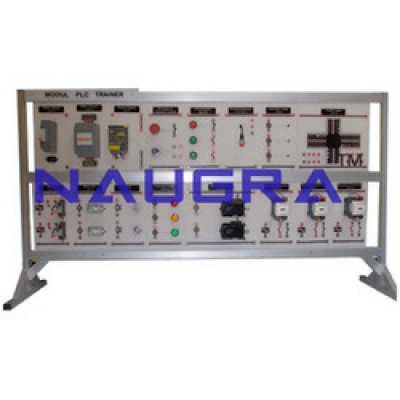
CPU: Microchip 16F877A / 18F452 Microcontroller ISP Programming facility. On-board interface like 8 I/P switches, 8 Led output, 16x2 LCD display, 4 digit 7-segment display, I2C like 24c512, DS1307 RTC, 8 bit ADC & DAC, Temperature sensor DS18B20 24 I/O Lines Provided on a 26 pin FRC Connector for external interface In-built Power supply of +/- 12V, +5V.....
Product Code: ES28 - (PIC Embedded Trainer for Embedded System Trainers Teaching Labs)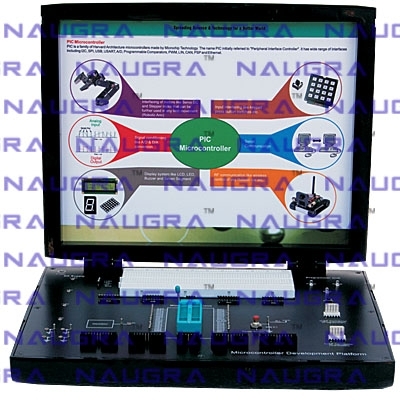
PIC Microcontroller Development Platform - PIC Microcontroller Development Platform Microcontroller Development
Platform is a full featured development platform for microchip
PIC16F877A microcontroller. It is an ideal platform to implement and
test the designs both for the beginners and the experts. This trainer is a
single microcontroller development platform. This trainer is a
convenient way to teach the principles of the family of microcontrollers
through to programming and interfacing on the 16 series device. Using
the platform, a range of projects in various domains like
telecommunication, robotics, consumer electronics etc can be done. This trainer gives designers a quick start to develop code on controller
with on platform programmer and on platform breadboard facility. The
flexibility of connectors allows the user to make external connections.
On platform breadboard allows making their own circuits and performing
an experiment as they desire.
PIC16F877A MCU clocked at 4 MHz
Expansion connectors for plug in modules and prototyping area
On platform programmer
USB interface to PC for programming
Every pin is marked in order to make work easier
Master Reset/Restart Key for hardware reset
Input/output & test points provided on platform
On platform breadboard for connecting external components
Self contained development platform with on platform DC Power Supply
CD with sample project code, Programmer software & useful documents....
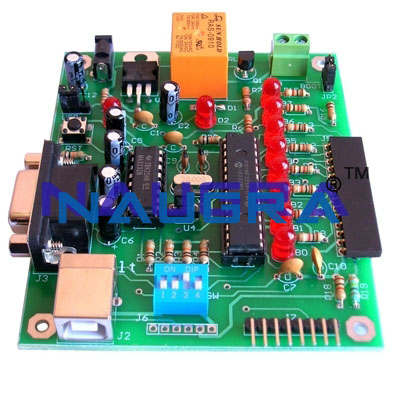
PIC Microcontroller Lab Trainers, technical teaching equipment for engineering....
Product Code: ACTI-0019 - (PIC Microcontroller Lab Trainers for engineering schools)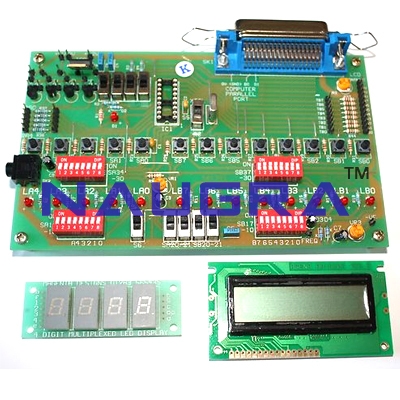
PIC Tutorial Development Board for Vocational Training and Didactic Labs- PIC Tutorial Development Board Comes with all the options, including LCD and LED - 7 Segment displays. Software included.....
Product Code: EBOARD0004 - (PIC Tutorial Development Board for Vocational Training and Didactic Labs)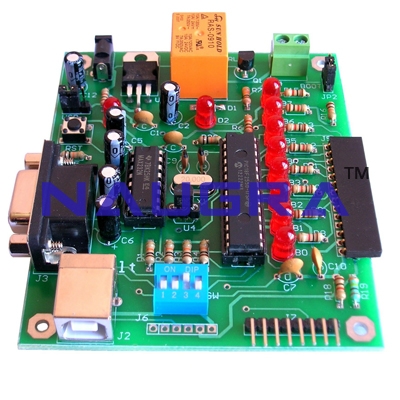
PIC USB Microcontroller Development Board, LCD, keypad, USB cable Equipment for Education, Engineering and Vocational Training - - Microcontroller development board kit. 48 Mhz, high performance multifunction system with embedded USB port, RS232 serial port, LCD 16 x 1 display, keypad (16 key), digital temperature sensor and more.
specially designed for use in a wide range of applications: as a trainer kit for learning of microcontroller systems, useful to students and teachers in technical careers or degrees in Electronics, Control, Computers, Mechatronics and Embedded Systems, or as development module in instrumentation, robotics, industrial control, communications, network monitoring and access control applications, among many others.
Module is based on the powerful high performance 18F2550 Microchip's multifunction microcontroller, with integrated USB v.2.0 port and may be programmed in ANSI C language. It has 28 pins DIL, which allows for a small card design, at a minimum cost. By means of a bootloader program, factory preloaded in its upper code memory, the system may be powered and programmed via its USB port. Power supply may be as well be fed through an external wall transformer. Everything you need -hardware and software- to develop new projects is included in the kit. Please go to our download page to get complete documentation and software for the system.
Development Software: through the MPLAB IDE software (Windows 8, Windows 7, Vista, and XP compatible), and C18 compiler developed by Microchip, you can edit, compile or simulate programs in ANSI C. The executable .hex file generated by C18 compiler is compatible with the Bolt v.1.0.2 programming software. During the development phase, board is powered through the USB cable.
Programming software: the system includes an special plug and play and easy to use programming software (Windows 8, Windows 7 (64 and 32 bits), Vista and XP compatible). You may transfer your compiled programs to FLASH memory directly through the USB port of your PC or Laptop. With this software you'll be able to program the whole 32 Kb of FLASH memory in less than 5 seconds.
USB embedded port: System has a built in USB port that may be handled like a serial port from both sides: the microcontroller and the PC. This is done thanks to Microchip's USB stack and libraries provided for the microcontroller, and the windows drivers provided for the PC. We have a complete and well documented project that describes in detail how to send and receive USB data using simple ANSI C serial port likewise functions.
Projects and test programs: we provide more than 18 projects, dozens of ANSI C and assembly language test programs, all developed using MPLAB IDE and C18 compiler. The projects are well documented, with complete block diagram, electronic diagrams and videos. Some examples are: an RFID detection system, a Bluetooth interface, and a 7x10 led matrix display.
Application PC software available: several of the mentioned projects use an special windows PC software developed in Visual Basic, Visual C++, or C Sharp, to control different options, including the handling of the USB port emulating a serial COM port. All programs have their source code available for users to use them on their own applications.
Tutorials: Several tutorials with different hardware and ANSI C programming of Bolt 18F2550 system topics are as well available.
Field applications: once the user has developed its project, and is ready for field applications, module may function without the need of the USB cable, using only an external wall transformer. Board includes a special power jack and an on card 5 volt regulator for this purpose (please see photos). In user mode, after power up, microcontroller will autorun application program.
C18 libraries, functions and templates: you'll be able to use C18 templates, libraries and functions, available for all interfaces in module i.e. LCD, keypad, temperature sensor, USB port, serial port, EEPROM, A/D converters. This makes development of new applications fast and simple.
Multifunction system: the system has ports for direct connection, without cables, of a 16 x 1 LCD display and an hexadecimal keypad (both included in the kit). It contains a serial communications port with complete RS232 interface, through which it is possible to perform remote control applications. It also includes a temperature sensor with its C18 functions available.
Additional devices built into the module: a total of 13-bit input/output, 8 leds, 4 microswitches, 1 relay with 127 VAC, 1 amp. contacts; asynchronous and synchronous serial port USART. Microchip's microcontroller contains also: SPI, I2C, 7-channel of A/D conversion with 10 bits resolution; 2 PWM generators, 4 timers, and a complete interrupt system.
HARDWARE:
Microcontroller: Microchip's 18F2550-I/SP, multifunction, high-performance, 28-pin DIP, operating with 20 MHz external crystal. Effective speed of 48 MHz, thanks to on-chip PLL multipliers. Harvard architecture, with RISC set of 75 instructions. Word length of 16 bits in code memory.
USB Port: v.2.0 compliant, 12 Mb/s. 18F2550 programming from PC or Laptop via this port.
Power supply: selectable with jumper. Either 5 volts directly from USB port, or non regulated 7.5 to 12 v. from an external wall transformer (card includes a power jack and an on board 5v. 7805 regulator). User may also connect a rechargeable battery to the power jack.
Firmware bootloader: preloaded, allows self-programming of FLASH memory using Bolt v.1.0.1 software. Using a jumper, the user may select either programming mode or autorun mode of operation.
Memory: 32K bytes (16K words of 16 bits) FLASH, 2K bytes of RAM, 256 bytes of EEPROM.
Testing devices: 8 leds connected as witnesses and 4 microswitches for emulation of digital inputs.
Input/Output Ports: A total of 21 bits programmable either as inputs or outputs, with 25 ma. sink or source.
Relay: on card. 127 VAC @ 1A contacts, with screw terminals and witness led. Power supply for relay may only be fed through the power jack for the external wall transformer to avoid inductive loads to the 5 volt USB signal.
Digital temperature sensor: DS18B20, integrated on module, with a resolution of 0.1 degrees Celsius (easily converted to Farenheit).
Timers: A total of 4 (16 bits), for generation of precision delays, real-time clock or event counters.
USART serial port: for asynchronous communication, with standard RS232 interface and DB9 connector.
Synchronous Serial Port: SSP with 2 modes, SPI Master/Slave mode and I2C Slave Mode.
PWM (Pulse Wide Modulation): 2 special outputs to generate PWM with 10 bit resolution.
A/D conversion channels: a total of 10 channels of analog-digital conversion with 10 bit resolution.
LCD display port: 14-pin, 8 data bits, for connection to any standard LCD display.
Keypad port: 8-pin connect to16-key hexadecimal matrix keypad. 6-pin auxiliary header for further expansion.
Special functions: Watch Dog to prevent microcontroller out of operation. Brown Out protection circuit reset. Low Power Sleep mode. Power up automatic reset. Code protect.
System interrupts: generated from multiple devices, including the state change from inputs, timers, USART, writing in EEPROM and 3 external interrupts.
Consumption: nanoWatt technology with very low consumption, <60 ma. @ 5 volts.
Dimensions: 8 x 9.5 cms., fiber glass, thru hole, high quality printed circuit board.
AVAILABLE SOFTWARE:
MPLAB IDE v.8.63: for any Windows platform, Microchip's integrated development tool, which includes built-in editor, macroassembler, simulator and C language compiler.
C18 Compiler v.3.40: Microchip's ANSI C compiler which can be integrated into MPAB IDE environment.
Software Bolt v.1.0.1: special bootloader plug and play software for this board, compatible with Windows 8, Windows 7 (64 and 32) bit and Vista or XP, for FLASH memory programming module, using its USB port.
Projects and test programs: we provide dozens of test programs in ANSI C, (using C18 compiler) for each of the Bolt module interfaces and functions. Also included are numerous projects, and assembly language test programs for controlling the leds, microswitches and relay.
Complete set of C libraries: libraries and functions are available for every interface: LCD, keypad, temperature sensor, USB port serial port, EEPROM, A/D converters. This makes development of new applications fast and simple.
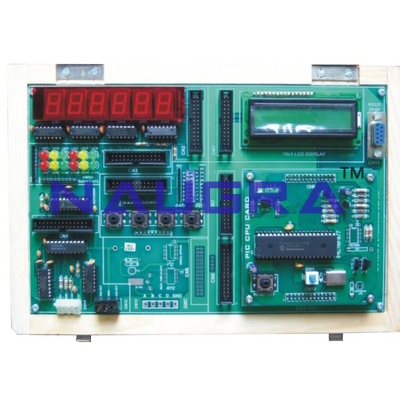
Equipment for Education, Engineering and Vocational Training - PIC16F877A & 18F452 Embedded Educational Trainer - Single board Universal Embedded Kit based on PIC (Microchip 16F877A / 18F452) Microcontroller for any Embedded applications. Feature 01. CPU: Microchip 16F877A / 18F452 Microcontroller 02. ISP Programming facility Onboard Application 01. 8 LEDs to display Digital Output 02. 8 Switches to give Digital Input each indicated by LED 03. 16*2 Alphanumeric LCD 04. 4 digit Seven segment displays 05. I2C compatible -24C512 EEPROM (64KB) -DS1307 RTC with suitable battery -4 Ch. 8bit ADC & 8 bit DAC using PCF8591 06. Temperature sensor interface Lm35 07. Temperature sensor interface DS18B20 24 I/O Lines Provided on a 26 pin FRC Connector for external interface 08. On board supply +/- 12V, 5V is provided 09. Supply Input Voltage: 230V AC 10. User's Manual with sample programs for all on board features....
Product Code: VLE-003-NE - (PIC16F877A & 18F452 Embedded Educational Trainer for Vocational Training and Didactic Labs)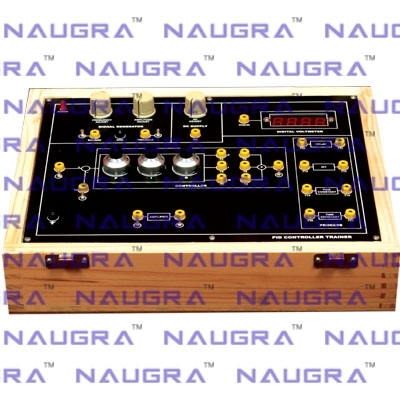
PID Controller Simulator Trainer - Simulated blocks like dead time, integrator, time constant, error detector and gain. Square & Triangle source of 1V p-p (min) at 40Hz. On-board PID set value constants using potentiometer. Built-in 3 1/2 digit DVM for DC measurements.....
Product Code: i28 - (PID Controller Simulator Trainer for Instrumentation Electric Labs)
Pigeon Dissection Bird Anatomy Zoology Model Manufacturer, Supplier and Exporter for Biology Lab
.... Product Code: BZOM-0017 - (Pigeon Dissection Bird Anatomy Zoology Model for Biology Lab)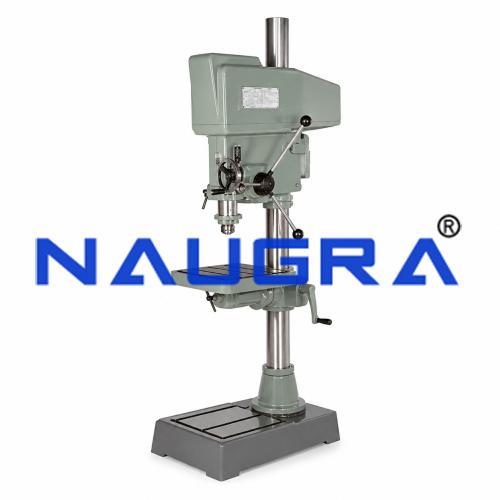
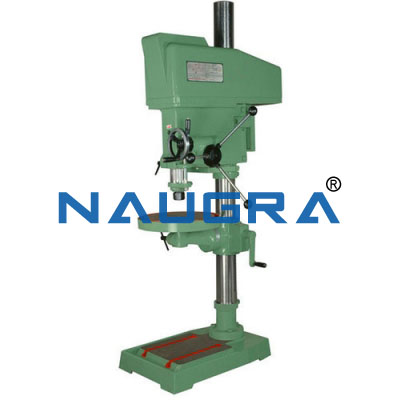
Pillar Drill Machine....
Product Code: Drill Machine0001 - (Pillar Drill Machine)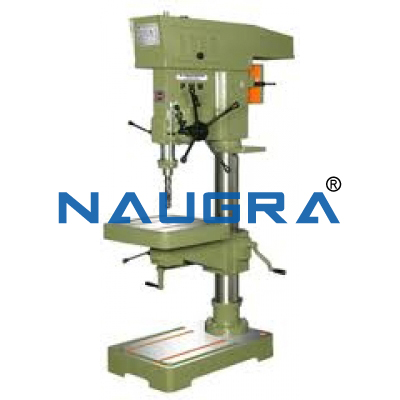
Pillar Drilling Machine - Maximum Drilling capacity 32mm, Max spindle stroke 130mm, 9 speeds, range 160- to 1880 rpm. with accessories including integrated coolant system, safety switch
....
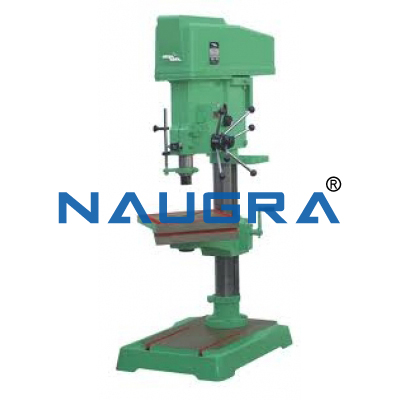
Pillar Drilling machine Table approx 300x400mm, speed150- 3000rpm, distance column-spindle 250mm....
Product Code: BDP9 - (Pillar Drilling machine)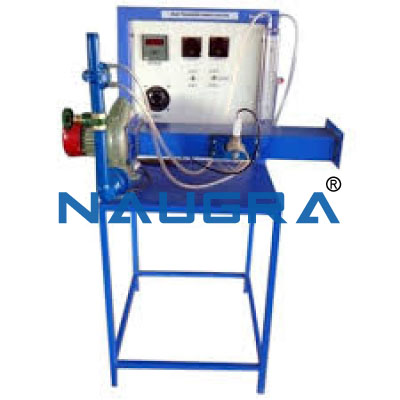
The Pin Fin Apparatus is designed to determine heat transfer from an extended surface (Pin). It consists of a metallic pin-fin which is heated at one end by electric heater. The heat is conducted along the length & is flows out from the pin surface. Five thermocouples are embedded along the length of the pin to measure the temperature distribution, one more thermocouple is placed inside the suction duct to measure the air temperature. A blower provides forced convection of air by blowing the air at high velocity. Flow rate of blower is measured by orifice plate & U Tube Manometer. The control panel consists of a dimmers stat to control the voltage supplied to the heating element. A Voltmeter, an ammeter and a digital temperature indicator are also provided.
Specifications:
Experimental Capabilities:
.... Product Code: NEGEMG169 - (Pin Fin Apparatus)
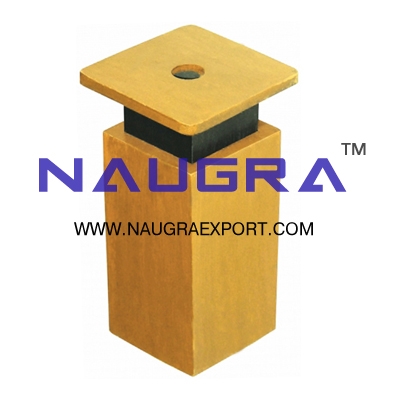
Pin Hole Camera Manufacturer, Supplier and Exporter for Physics Lab
.... Product Code: PLIT-0060 - (Pin Hole Camera for Physics Lab)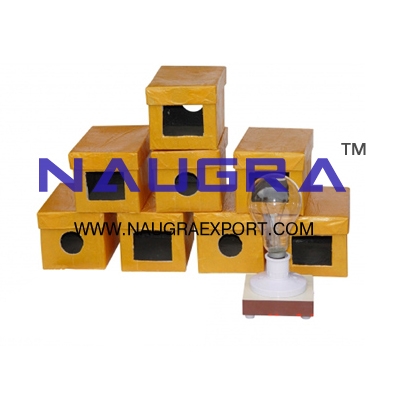
Pin Hole Camera Kit Manufacturer, Supplier and Exporter for Physics Lab
.... Product Code: PLIT-0061 - (Pin Hole Camera Kit for Physics Lab)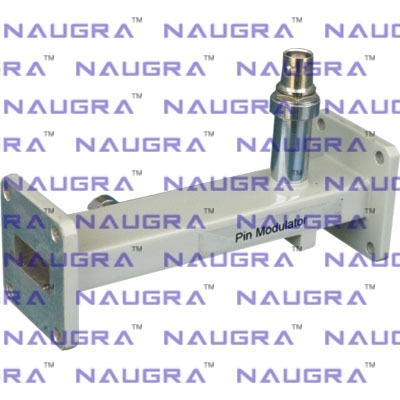
Pin Modulator -
....
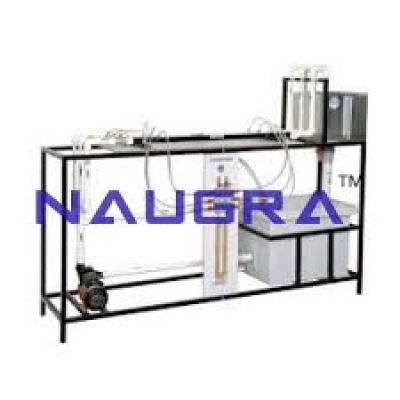
PIPE FRICTION APPARATUS for engineering schools....
Product Code: MCH008 - (PIPE FRICTION APPARATUS for engineering schools)PIPE NETWORK APPARATUS....
Product Code: Workshop Lab - FMW0009 - (PIPE NETWORK APPARATUS)Pipe Surge & Water Hammer Apparatus
The apparatus is designed to generate and visualise water hammers in
pipes and to demonstrate how a surge chamber works. The trainer contains
a pipe section with a surge pipe, solenoid valve & ball valve.In
the first experiment a pipe surge is produced by rapidly closing the
solenoid valve. The sudden deceleration of the water mass releases
kinetic energy, which is converted into potential energy in the surge
pipe. The resulting pressure oscillations are measured by a pressure
sensor in the pipe.The oscillations are plotted on a strip chart
recorder. The oscillation can also be seen as pendulum movement of the
water level in the surge chamber.In the second experiment the valve at
base of surge pipe is closed so that the rapid closing of the solenoid
valve in the pipe section produces a strong water hammer. The water's
kinetic energy is converted into pressure energy. The water hammer and
the subsequent oscillations are detected by the pressure sensor in the
pipe section and plotted on the strip chart recorder.
EXPERIMENTAL CAPABILITIES:
.... Product Code: NEGEMG128 - (Pipe Surge & Water Hammer Apparatus)
Pipes Disodium Salt....
Product Code: NECHEMICAL-L5005029 - (Pipes Disodium Salt)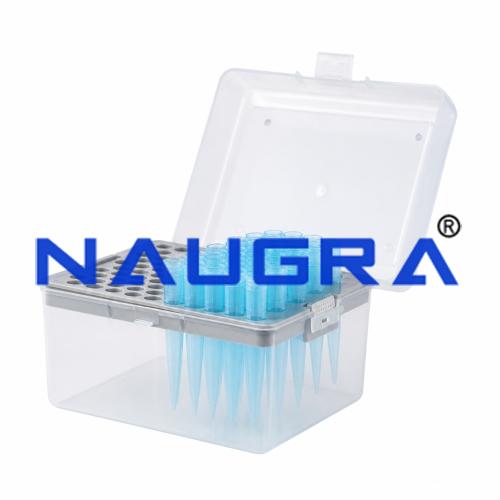
Made of polypropylene, this Pipette Box is designed is such a way that it can hold Pipettes of different lengths. The top of the box screws on the bottom and the height can be adjusted by screwing or unscrewing the top.
Material : Polypropylene
Pipette Bulb Description: Our product range includes bulbs, pipette. We are leading manufacturer & exporter of pipette bulb from India....
Product Code: NLAB-0295 - (Pipette Bulb for School Science Lab)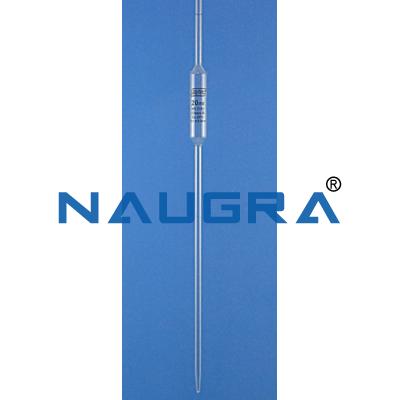
Pipette Bulb....
Product Code: NLGP-0179 - (Pipette Bulb for Science Lab)Pipette Description: Manufacturer & exporter of filler, pipette, bulbs, pipette.....
Product Code: NLAB-0294 - (Pipette for School Science Lab)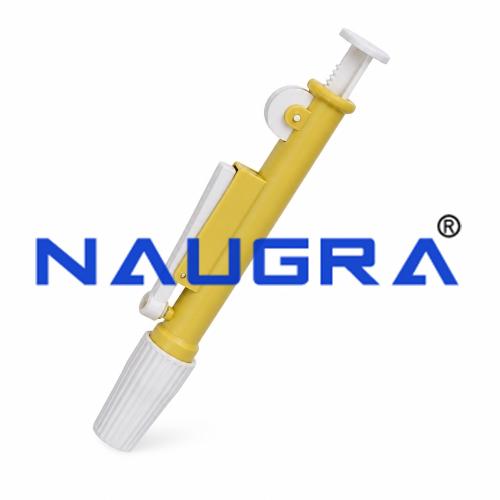
This is a fast release pipetting device for precise pipetting & zip - quick emptying. The Knurled thumbwheel can be rotated to draw up or dispense liquids while the releaser may be pushed in for zip-quick emptying. The moulded chuck has a silicon rubber collet inside to hold various pipette of standard sizes. It resists acids & alkalies and can be easily disassembled for through cleaning.
Material: Acrylonitrile Butadiene Styrene
Size: 2 ml, 10 ml, 25 ml
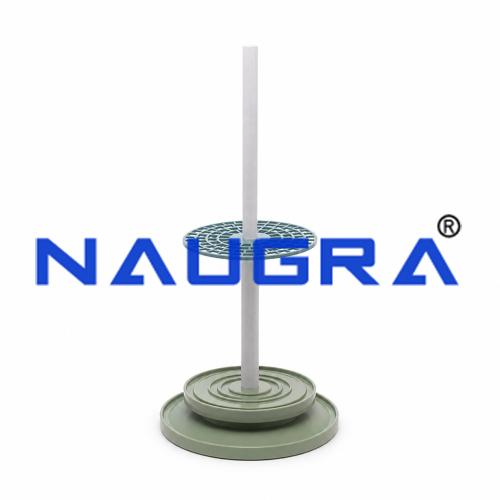
Moulded in Polypropylene, this unique stand holds a maximum of 94 pipettes and rotates on a central vertical axis for convenient selection of any particular pipette. The lower rotating disc has four concentric troughs with tapered sides and open bottoms which cradle the pipette tips protectively and permits water drops to runoff. The upper disc has a grid pattern concentric with the bottom disc and keeps the pipettes vertical. Liquids draining off the pipettes are retained on the top of the stationary base by the outer ring. This stand can be easily disassembled & reassembled.
Material : Polypropylene
For 94 Pipettes
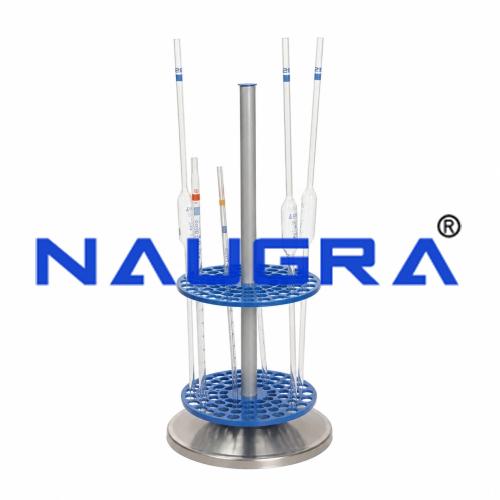
This is a stable, non-corrosive, detachable Stand which can hold 28 pipettes with maximum dia 14mm. The heavy base measures 225mm in diameter and a Polypropylene coated square rod measuring 375mm in length is screwed into the base.
The top disc that can be fixed on the rod has holes for holding pipettes while the lower one has pilot holes where the pipette tips rest and liquids drain down to the base. These discs can be adjusted on the rod according to the length of the pipette. The arrows provided on the discs should be kept parallel to ensure that corresponding holes are being centered.
Material : Polypropylene
For 28 Pipettes

Pipette Stand Manufacturer, Supplier and Exporter for Chemistry Lab
.... Product Code: CGEN-0076 - (Pipette Stand for Chemistry Lab)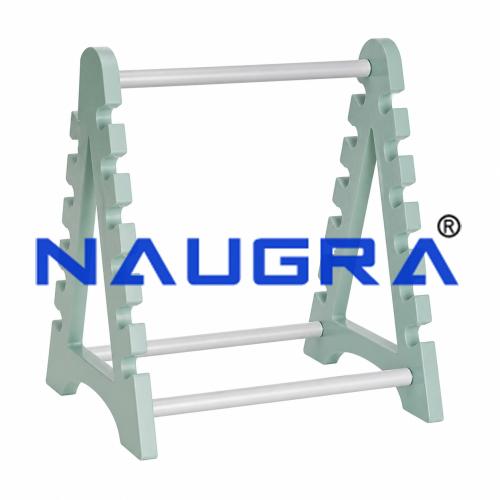
This detachable Stand can hold 12 Pipettes, 6 on each side, in a horizontal position. Moulded in Polypropylene, this autoclavable stand has two sides which are attached to each other with three metallic rods coated with Polypropylene. This stand can be easily disassembbled for space saving storage.
Material : Polypropylene
For 12 Pipettes
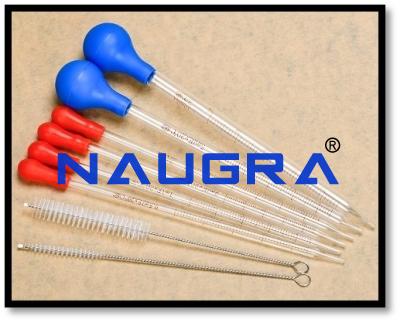
High-quality glass pipettes with rubber teat, narrow mouth, for transferring small liquid volumes in laboratory use.
.... Product Code: TE669 - (Pipettes)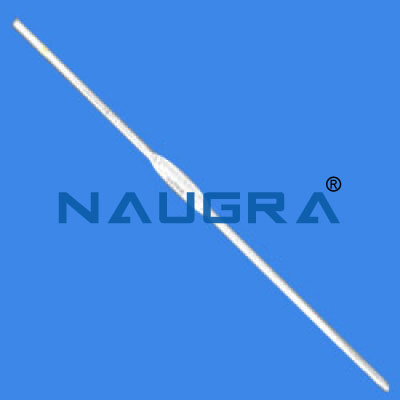
Pipettes Graduated for partial out flow With zero at top Class 'B' Manufacturer, Supplier and Exporter for Science Lab
.... Product Code: NLGP-0048 - (Pipettes Graduated for partial out flow With zero at top Class \'B\' for Science Lab)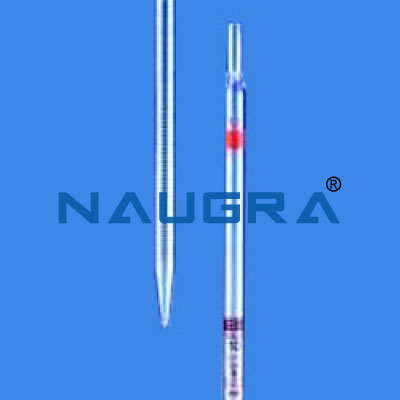
Pipettes Graduated for partial out flow With zero at top Class 'AS' Manufacturer, Supplier and Exporter for Science Lab
.... Product Code: NLGP-0049 - (Pipettes Graduated for partial out flow With zero at top Class \'AS\' for Science Lab)
Pipettes Volumetric Transfer With one mark, Class 'AS' for Manufacturer, Supplier and Exporter Science Lab
.... Product Code: NLGP-0047 - (Pipettes Volumetric Transfer With one mark, Class AS for Science Lab)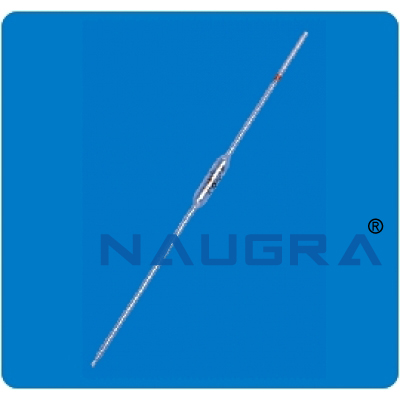
Pipettes Volumetric Transfer with one mark, Class B Manufacturer, Supplier and Exporter for Science Lab
.... Product Code: NLGP-0046 - (Pipettes Volumetric Transfer with one mark, Class B for Science Lab)PIPING LOSS APPARATUS....
Product Code: Workshop Lab - FMW0007 - (PIPING LOSS APPARATUS)PIPING LOSS APPARATUS, Small....
Product Code: Workshop Lab - FMW0004 - (PIPING LOSS APPARATUS, Small)PIPING LOSS TEST SET, Large ....
Product Code: Workshop Lab - FMW0006 - (PIPING LOSS TEST SET, Large)PIPING LOSS TEST SET, Small....
Product Code: Workshop Lab - FMW0003 - (PIPING LOSS TEST SET, Small)
for Soil Testing - Useful for collecting undisturbed samples from soft to stiff clay and sand. Till the desired depth is reached the bottom of piston is kept flushed with the cutting edge of the sampler and on reaching desired depth only the sampling tube is forced into the soil keeping piston fixed in ground and then collecting the sample in the tube. The under pressure developed in the sampler while the sample tube advances, hold the collected sample. SPECIFICATION : The outfit consists of sampling tube, 55mm o.d., 580mm effective length piston, one piston connecting rod 1 mtr. Long and a drive head with check valve and adaptor for 'A' drill rod.
.... Product Code: P85 - (Piston SamplerPiston for Soil Testing Lab Sampler For Testing Lab)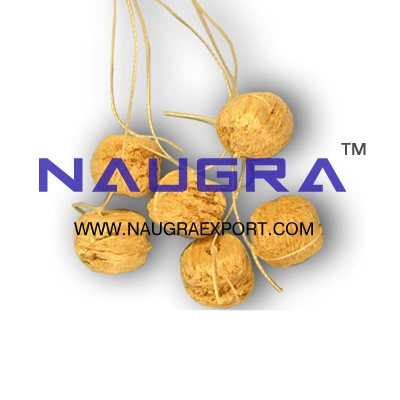
Pith Balls for Physics Lab India
.... Product Code: PEST-0022 - (Pith Balls for Physics Lab)PITOT TUBE APPARATUS
.... Product Code: Workshop Lab - HBW0013 - (PITOT TUBE APPARATUS)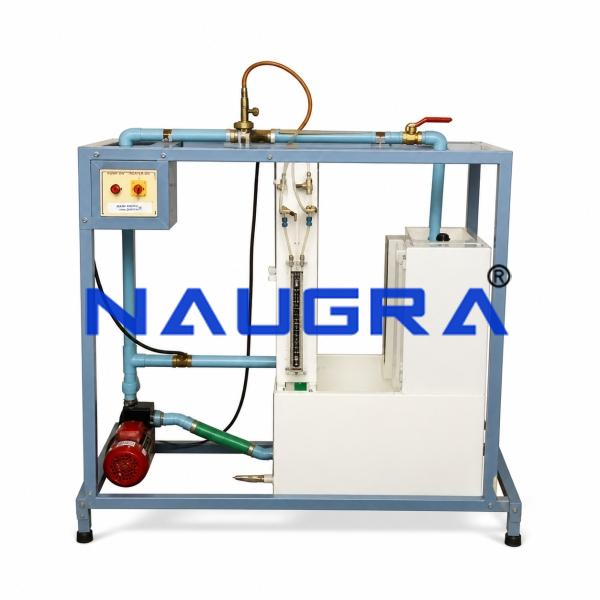
Pitot Tube Set Up for engineering schools
.... Product Code: Fluid-Mechanics-India-Lab-FMLNE0005 - (Pitot Tube Set Up for engineering schools)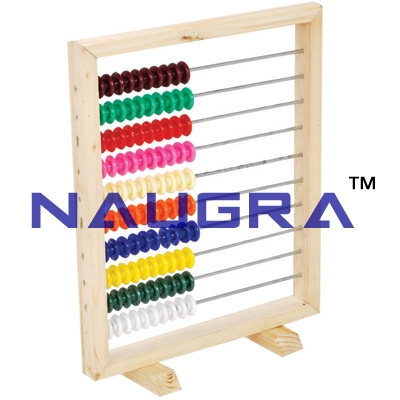
Frame Abacus (wooden) With Beads
This wooden Abacus with 10 wire and 10 beads in each wire in 10 different color beads is a “calculator” that teaches math skills, pattern and color recognition, and more! Fun activity ideas included. Incredible value and superior craftsmanship characterize this childhood favorite. Brightly colored, smooth-sanded pieces help build early shape, color and size differentiation skills.
Counting Abacus (wooden) With 55 Beads
This is simple wooden frame abacus with 10 wire, 1st wire contains 1 bead and 10th wire contain 10 beads in ascending order. This abacus can be used in elementary classes to teach counting.
Game Of Place Value
To demonstrate place value of numbers. This wooden base U shape wire abacus with 6 wire and 9 beads in each wire to understand the value up to lac.This abacus gives facility to the student to hold and learn the basic place values of numbers by do and discover concept. The overall measure of wooden base is 20 cm x 7 cm, and thickness 18 mm.
Decimal Abacus
This wooden base abacus with measure 15 cm x 4 cm, thickness 18 mm having 7 holes with 7 spikes of 4 mm thick metal, provided with 70 beads of 7 colors. This abacus gives the facility to understand decimal place value.
....
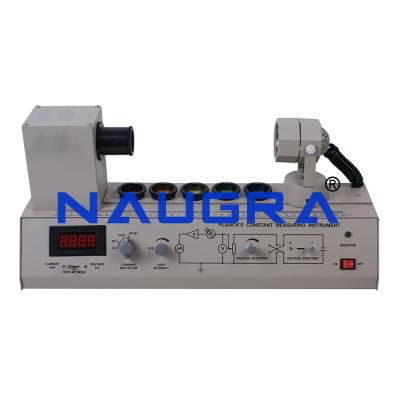
Planck Constant Apparatus
.... Product Code: NELAB-21-A1001 - (Planck Constant Apparatus)